Bruce Lee Vs Jackie Chan - GameDay Database Information Guide
Background on Bruce Lee Vs Jackie Chan - GameDay Database

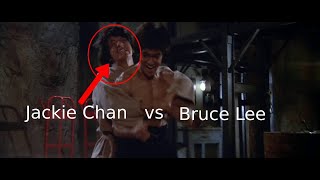
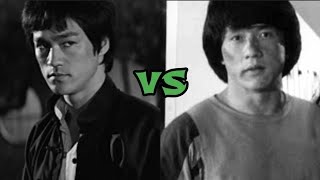
Bruce Lee emerged in the late 1960s with Jeet Kune Do, a minimalist system that stripped combat to its most efficient movements. He championed “using no way as way,” urging students to discard rigid forms in favor of personal expression. Jackie Chan, entering the film scene a decade later, built his career on Hong Kong’s action‑comedy tradition, integrating elaborate set pieces, slapstick timing, and an emphasis on safety and teamwork on set. Lee’s philosophy addresses the pain point of over‑structured curricula that choke creativity. By encouraging “absorb what is useful,” he offers a solution: a flexible training mindset that adapts to each practitioner’s strengths. Chan’s methodology tackles the opposite issue—performers who struggle to engage audiences—by showcasing how humor and precise choreography can transform a fight sequence into a universally appealing spectacle. Lee’s technique prioritizes speed, directness, and economy of motion. His famous one‑inch punch demonstrates kinetic efficiency, a principle useful for anyone seeking to maximize power without bulk. In contrast, Chan’s style relies on fluid transitions between combat and physical comedy, demanding a broader skill set that includes acrobatics, timing, and improvisation. For a practitioner frustrated by plateaus in pure striking, Chan’s incorporation of varied movements offers a practical avenue to break through. Both artists stress discipline, yet their training environments differ. Lee’s private, intense sessions emphasized mental focus; Chan’s collaborative sets required coordination with dozens of crew members, mirroring a team‑oriented workflow. This dichotomy illustrates two solutions to common challenges: solitary refinement versus collective rehearsal. Today, gyms blend Lee’s efficiency with Chan’s showmanship. In mixed‑martial‑arts (MMA) camps, coaches borrow Jeet Kune Do’s principle of “intercepting” to sharpen timing, while fight‑scene choreographers adopt Chan’s layered stunts to enhance visual storytelling. The result is a hybrid model that satisfies both competitive athletes and performers seeking broader marketability. Welcome to SportEye! Today, we're unveiling something truly extraordinary – rare footage of
When the names Bruce Lee and Jackie Chan appear together, the debate pivots on two distinct legacies: Lee’s revolutionary philosophy and lightning‑fast technique versus Chan’s blend of comedy, stunt choreography, and audience‑friendly storytelling. For busy practitioners and fans, understanding these differences clarifies which approach best solves common training frustrations—lack of focus, stagnant skill growth, or the need for broader market appeal.
Main Features
History




Deep Dive
Data is compiled from public records and verified media reports.
Last Updated: August 24, 2026
Conclusion

Disclaimer: Disclaimer: All {Player Profile|Athlete Statistics|Sports Record|Performance Profile|Match Statistics|Sports Database} information, player statistics, rankings, and performance data are compiled from publicly available sports databases, official league records, and trusted third-party sources.
